Interview with Dr Arik Beck
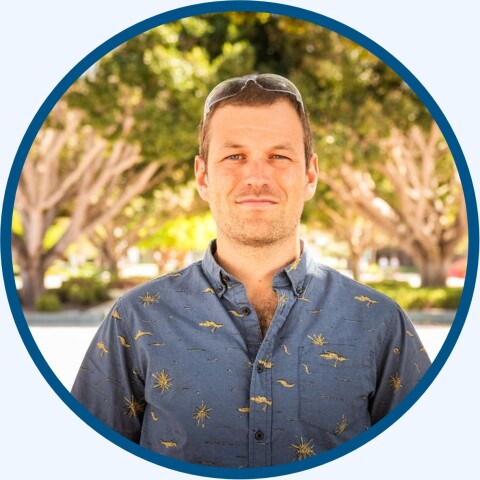
In our inaugural EFCE Early Career Interviews episode, we sit down with Dr Arik Beck, research group leader at Karlsruhe Institute of Technology(KIT) in Germany.
From studying chemical engineering in Karlsruhe, to a PhD at ETH Zurich and research stays at Stanford University and UC Santa Barbara, Arik’s journey spans some of the world’s leading research institutions and is recognised with various distinctions, including the EFCATS Best PhD Award (2023), the ETH Zurich Silver Medal and major research funding such as a Helmholtz Investigator Group Leader position.
We talk career twists, rejection, motivation and why chemical engineering is a true “Swiss army knife” for solving global challenges.
You can learn more about Arik and connect with him through the following links:
Research Group, LinkedIn Profile, Google Scholar, ResearchGate
24th April 2026
TP: Dr Theodoros Papalas AB: Dr Arik Beck
TP: To kick things off in a relaxing way, I will start with an icebreaker question that we would like to ask in the beginning of our interviews: Could you tell us which chemical compound or element of the periodic table best represents you and why?
AB: Hi, everybody! Thanks for having me. I am not really that kind of person that looks at the periodic table and thinks “Oh, this element forms that bond and that compound”. Also, I do not make jokes about chemistry so often, but, thinking about the question, I would say that one of the materials with which I worked a lot is platinum. So I will maybe go with this. One of the reasons why I have picked it is that it is pretty rare, so you have to work scarcely with it. This is something that I value a lot in doing science: we should strive for quality over quantity and maximise what we can achieve with the limited resources that we have.

TP: From your answer, we can already see a bit of what you are doing in your research, but let's elaborate a bit more on that. Could you tell us a bit of what drew you to chemical engineering overall and how has your view and perspective of this field evolved, starting from your bachelor degree until today?
AB: When I was a high school student, it was not very clear to me that I would become an engineer, or even a chemical engineer. I did not major in chemistry and I was quite undecided about what to do after graduation. I think that it is important to mention that at the time I was torn between studying psychology and becoming a movie director. I was really all over the place. Then, through random conversations, since I liked science and math, I realised that chemical engineering might be a good fit. Somebody told me that this subject is a sort of ”Swiss army knife”, a field where you do not decide when you start studying what you will become later and where you can have many different possibilities. And what also resonated with me, that I still believe is very relevant today, is that chemical engineering allows us to solve many urgent challenges.
So, this was the mindset that I had when I started to study. I completed both my bachelor’s and master’s degrees in chemical engineering in Karlsruhe, where I now work. However, I do not think that the bachelor’s and master’s programmes really fulfilled the “Swiss army knife” promise. During that time, the studies felt much more oriented toward preparing you for the chemical industry: learning how to design a stirred tank, calculating wall thicknesses and so on. It seemed somewhat far from the broader vision I initially had. That said, I also became quite industry-focused in that environment. After an internship, I worked in process optimisation at a medical technology company. I was involved at the assembly line level, analysing how workers could best organise their breaks and how the layout of the assembly lines should be adjusted. It was very applied, business-oriented engineering. At the time, I thought: this is what I want to do. But I also felt that something was missing, a certain sense of meaningfulness in terms of the impact of your work.
This was still between my bachelor’s and master’s studies. I have always enjoyed travelling and going abroad and I was determined to spend some time in the US. During my master’s, I tried to secure a research position there and eventually I managed to spend six months at Stanford. That experience fundamentally changed my perspective on my future career, because I was given the opportunity to pursue my own research, even before starting my master’s thesis. The PI, Matteo Caniello, essentially told me: “Do whatever you want, you came here with your own funding”. It was exciting and also challenging, but it made me realise that I wanted to do science. The work I did there was very fundamental and it gave me the feeling that what you do can have a lasting impact. This completely shifted my perspective: from wanting to work in industry and see fast, tangible results, to doing deep, focused research.
After returning to Germany, I completed my master’s with another excellent experience in catalysis research. I then moved to Switzerland to pursue a PhD at ETH Zurich, focusing again on fundamental catalysis. During that time, I was exposed to different perspectives within the chemical engineering department, which further broadened my view. Later, when I moved to the US for my postdoc in Santa Barbara, my understanding of chemical engineering expanded even more. If we think about what chemical engineering really means, I see it as one of the key sciences enabling technologies for a better future. It cannot change the world on its own, because society and policy are still essential, but in areas such as agriculture, medicine, energy transition, pollution abatement and technology development, chemical engineering plays a central role. In Santa Barbara, I worked with researchers studying blood flow behaviour in vessels and on band-aids, still focusing on catalysis. All of these topics fall under chemical engineering. That was the moment when I truly rediscovered the “Swiss Army knife” idea.
Therefore, I no longer see chemical engineering as merely a company tool for the chemical industry, but as a bridging discipline that can drive meaningful change. I am very glad that I ultimately decided to stay in this field.
TP: From all this journey that you have done, could you tell us about a project or piece of work that you are particularly proud of?
AB: I think there are some projects I could mention and that is always nice when you feel proud of your work, but I would like to highlight one of my most recent works, which is the result of my postdoc in Santa Barbara. There, I studied the photodesorption of carbon monoxide from platinum catalysts. It is a very fundamental topic, but photocatalysis using metals is currently attracting increasing attention. Metals can absorb light in the visible range, which means we may be able to harvest much more photons to drive chemical reactions. This is particularly exciting, especially when these photochemical effects go beyond the conventional thermal chemistry that we all know and use in most chemical processes, apart from electrochemical systems. What I especially appreciated about this work was the opportunity to dive deeply into the literature. This is something that definitely characterises me as a researcher, as I enjoy reading older papers from the 1970s and 1980s and even before. So, when I joined that group, I came across discrepancies between classical surface science studies and the current approach to this field. Afterwards, I used IR spectroscopy to measure carbon monoxide coverages on platinum catalysts and ultimately derived a kinetic model describing this photo-process.
Another reason why I like this project is that it demonstrates that impactful research does not always require the most advanced or expensive equipment. While institutions such as KIT are well equipped with sophisticated tools, for this study I relied on an IR, which is one of the cheapest instruments in a laboratory and even a laser originally designed for discos. And it really involved thinking hard for a couple of years about a relatively simple experiment using simple tools, which, I believe, ultimately led to quite impactful results. This is something I find particularly motivating: sometimes you do not need the newest and most expensive equipment if you think deeply enough about the problem.
''This subject is a sort of Swiss army knife, a field where you do not decide when you start studying what you will become later and where you can have many different possibilities. And what also resonated with me, that I still believe is very relevant today, is that chemical engineering allows us to solve many urgent challenges''
TP: Also, we know that, along your career, you have accumulated several awards. If I can list some of them, you obtained the best PhD award from the European Federation of Catalysis Societies (EFCATS) in 2023 and the Silver Medal from ETH Zurich. You also have some major research grants, like the Young Investigator Group Preparation Group Fellowship from KIT and your current Helmholtz Investigator Group Leader Research Funding. Could you tell us a bit of how intense the work is behind doing an application for either an award or a research grant?
AB: Yes, career-building activities like this are definitely intense. However, I think there is a clear difference between awards and grants. With awards, you look back at what you have achieved and there is a certain personal evaluation involved, asking yourself whether the work was good and whether you are proud of it. Grant applications, on the other hand, push you to present ideas for the future.
Coming back to awards, I think it is quite rare that someone nominates you without any effort on your part. It can happen, but it is not something you should rely on. Especially for younger researchers who are listening to us, if you are doing your PhD, there are often awards that are relevant for your field or that are assigned at conferences you regularly attend. If you think an award might be suitable for you, it is worthwhile approaching someone who could nominate you and asking for their opinion. It may also happen (and this happened to me) that someone tells you that you are not ready yet. That is part of the game. Throughout our careers, as an important growing step, we have to accept rejection, sometimes even more often than acceptance. If we remain realistic, we can continue and move forward. This was essentially my “recipe” for the EFCATS Award. I asked my PhD supervisor whether he thought I would be a suitable candidate. After that, I did not hear anything for about half a year and then I received the call that I had received the award. So yes, some initiative and effort were involved.
I also believe it is always good to provide a pre-written recommendation letter, outlining what you consider your key achievements. This connects to research grant applications, where you need to be very self-conscious about your strengths and also about your limitations. For awards, someone else may write the letter for you, but, when writing applications for research grants, you need to be aware of what you are or you are not good at.
For me, this was a very intense process. I spent around one and a half years mainly writing large research proposals for group funding. I also wrote proposals that I ultimately never submitted. I even changed topics because I wanted something that uniquely fit my profile. At first, I was probably leaning a bit more towards fashionable, state-of-the-art topics, for example machine learning, but I realised that this was not a reflection of my real expertise. These things take time to build. Writing competitive grants is extremely challenging and you need to invest a lot of effort. Otherwise, you may spend a lot of time writing without achieving the outcome you hope for. The year when I was submitting proposals, attending interviews, refining ideas with friends and colleagues and sometimes discarding them entirely, was an incredible learning curve, but also very intense.
TP: When you were talking about your career journey, you mentioned you had some overseas experience, at Stanford University as a visiting student researcher and at the University of California Santa Barbara as post-doctoral researcher. I guess that you have met some people that have probably been influential in your career. Could you tell us a bit more about this and how community and collaborations have shaped your career so far?
AB: I am a communicative person, so people are really relevant to me, but I think this is true for everybody. I feel people that you meet in your private life, at work, they all ultimately shape the person that you are. And especially if you work with people intensively for a couple of years, this will leave traces in your personality. And clearly, this has been really rewarding and this is also definitely a piece of advice that I give everybody I talk to: try to visit as many places as possible. When you spend half a year as an exchange student, visiting PhD student, or postdoc in a group, you learn enormous amounts, not just scientific skills, but really how people actually are. So for example, now that I'm moving into a leadership position myself, I definitely realised how much I draw from the experiences that I had in different groups and the way to run a group. Because some things were bad, but now I know how I could do them differently because I have reflected on them. And if you're kind of limited to only one group that you experienced for a longer phase, you may actually not know what possibilities exist out there. So yes, I think it was really influential and I always had good experiences with the people that I worked with. In fact, I'm still in contact with all of them, which I can also recommend. When I left KIT, I still returned occasionally to the Christmas or summer party if I was not far away. Now, when I travel to the US, I try to put in an extra stop in Stanford to visit the group there. The same goes for Santa Barbara. And slowly you build up a network and that is really important for me.
The people that you worked with shapes your thinking, but then you can kind of cherry pick and see what works for you. Also, if you see something that was bad for you, it is also a learning experience. So I think this is really influential and I think this is probably true for many.
I think this is why the academic family tree is so relevant in academia. You ask who someone’s supervisor was because it probably tells you something about who they are. This is very interesting in my field, catalysis. You can often immediately see in someone’s publication if they worked with a certain professor because the figures look similar. So it really shapes the future of many careers.
But another thing that I am now thinking about, which I underestimated when I was younger doing my PhD, is the importance of the friends you make during your PhD. During my first year, I met people at the summer school and had a good time, but you think, those are also first-year PhD students. But then five, six years later, you meet these people again and they are now also in their PI position. So now, you can exchange ideas, you can start collaborations and this is your cohort. These are the people who will stick around in your career for much longer than the more senior people. And I was really underestimating how important this has actually become right now. I am currently organising a symposium for a conference with one former PhD student from my time in Stanford. We just met at a conference and then we said, let's do this together. And we were really young and inexperienced at that time, but we knew each other. And this is true for many, many people throughout their career. So really appreciate the people that you meet and work with, even if at that point you think they are on your level or below. All these connections are important for your career and your development.
“I no longer see chemical engineering as merely a company tool for the chemical industry, but as a bridging discipline that can drive meaningful change”
TP: The next topic that I would like to touch on a bit is about failure. As we all know, behind every success, there are also some moments where things do not go as planned, either if it is an interview where we do not have the outcome that we expect, or if it is a year-long experimental project during a master thesis where we do not get significant results. But we need to remember that even when failure occurs and I think you mentioned this as well a bit, we must not let this discourage us because we should recognise it as a valuable experience and as something that we still learn from that. So would you share if you had some kind of failure in your career so far and what it has taught you?
AB: So experimental or computational failure is something supernatural that will come and that we have to grow and be used to. I will shortly highlight one very important experience that I had during my master's thesis. We synthesised a catalyst material that was outperforming everything else that we had made. And I was super excited and of course, thinking of publishing this great paper and so on. And we actually discussed the possibility of having impurities in that material, but we had our argument why this could not be true. Long story short, there were impurities in that material that caused that super good performance, which was not that exciting after all. But it really taught me that if you get something really exciting, you have to be extra cautious in thinking how you move on with that and maybe double check. Nevertheless, I think this is a good learning curve and ever since I am cautious about making big claims.
On a more personal note regarding career development failure after the PhD, I think it is a really stressful period for everybody. Whether you go to industry or stay in academia, you have to find out what you can do and what you want. And during and after my postdoc, I got pushed to apply for professorship positions at good places and ultimately was rejected many times. And of course, this is not the nicest outcome, but I learnt that failure or rejection is just part of the game. But now, one and a half years later, I also realised that it might have saved me a lot from being overloaded with too many duties of teaching, or suddenly being responsible for a large group. For example, in Germany, if you would be a big professor, you'd also be head of the workshop and you would have many, many employees. These are a lot of new responsibilities that can be really overwhelming. And I learned that some things are also not to come that fast to you. If you think you want that position because that is your ultimate goal, you maybe don't want that at that point and maybe a smaller start is much more useful. Now, I really enjoy the position that I am currently in, which feels really natural, offers good growth in my responsibilities and still allows me to build up science that is meaningful.
TP: If I could shift a bit into the future, looking ahead, where do you see yourself? Do you know what are your research directions and what you would like to do?
AB: So right now it is a really exciting time for me, as I am building up a group. It definitely makes me feel I am part of the next generation in shaping chemical engineering, which for me, mainly means catalysis. I am really looking forward to it and I hope to be a relevant voice in the field, not just within a very niche topic, but across catalysis overall. But we will see. I am determined to stay in academia. It really suits me. I love doing science and I love discussing science.
It is such a great experience currently to have people doing science and then I discuss it with them and new experiments come from it and that I do not have to be in the lab anymore. I really enjoy this. It comes with paperwork, etc., but still, this is really great and I am looking forward to building up on this and shaping this field around what I am currently working on and what my group is going to be working on.
We have very exciting results on diluted alloys with some unusual combinations that we started to look at and are starting to unravel. We do a lot of structural characterisation and dynamics of materials while they work. Just seeing how these alloys transform, segregate and getting the fundamental kinetics of these processes, is for me really exciting and something that will be, I think, very wealthy for what we can ultimetely do with these materials in terms of photocatalysis, but also classical catalysis.
The other research topic that I am super excited about, because it is switching fields for me, is working on water splitting with photocatalysis. It is still catalysis, but it is a very different community, one that I am not yet part of. So, it will be a big learning curve, but I think the field is really ripe to get a chemical engineering perspective, to be more quantitative and to think about integration and what we can bring into it with our quantitative mindset. So this is coming up. The section of the group is building up and I am really excited to bring Arrhenius plots and these things into photocatalysis and water splitting.
“Sometimes you do not need the newest and most expensive equipment if you think deeply enough about the problem”
TP: I would like to move away from science for a moment and talk a bit about life outside of the lab, because balance is very important as well. Could you share with us what is a non-scientific and fun activity that you are doing outside of work to distress?
AB: Maybe one thing that is also important there, it is not always to de-stress, but it is definitely helping me to balance my life a lot, is the fact that I am a father and I do my best to be at home as much as possible and to have an equal distribution of care work there. And this is, despite being challenging with respect to work time, a great balance to other things that are really important in life. And to hang around with my kid is one of the biggest joys that I have currently.
But outside of this, before I was a father, it was really important and it still is, that I like to climb. Rock climbing is really a great activity, also a communicative and group activity that I like a lot. And maybe more on the introverted side, as I said, I wanted to become a movie director. I really enjoy going to the movies and watching them, mainly in the cinema, which is really great and music is also important for me. Not performing or producing music, but listening to music properly while sitting on the couch and just doing this as an activity. These are the artsy things that I like to do to decompress.
TP: You have already mentioned that you are collaborating with many people and recruiting others to join your research. So, if someone were to approach you, what is the first thing you would look at, either when looking at them directly or when reviewing their application or e-mail?
AB: Thank you for advertising this. I am honestly building up a group and need people. And what I really enjoy is a diverse and international team. So any background I would say is welcome in my group. But getting these applications is a really interesting question because even at my career stage, I already get swamped with emails of people applying to me. And if I am honest, I do not spend more than three to 5 minutes on an e-mail before I make an initial judgement whether I will continue or look even deeper or open the attachment. So, I see that it is highly competitive to reach people. And I mean, I am nobody in comparison. If you apply to somebody that is well known, you can expect that those people will get maybe 100 applications a day, I do not know. And so you cannot expect that they will spend a lot of time on each e-mail. So I think this is really important because in the age of ChatGPT, writing a polished e-mail, CV or motivation letter is not that hard. So what really strikes me and I think this is probably true for many others, is to see a real person in that e-mail. And that needs to happen within the first three to five sentences. I need to see the connection to my work or to me. And this should be honest and genuine about what you feel about it.
So, for example, if you now write to me “I listened to that podcast and I liked what you were saying, so I would like to work with you, even though I did my master's in organic chemistry”, that would be something that I would be interested in. If somebody tells me that my research aligns with theirs and I look and see that their first publication is not a match, then it does not feel honest, but more like they are just trying to guess what I like. So the more I can see a real person in the first sentences of an e-mail, the more it matters. And in general, I stick to that statement. I do not care too much about pre-existing knowledge in my field. What really matters is motivation. You cannot motivate somebody who is unmotivated, even though this person is an expert already. But somebody who is really motivated can within half a year adapt to any environment. And this is also how I liked to grow in science, by going outside of the box. So, do not hesitate from your background, but be interested in working with me and this should be honest.
“We have to accept rejection, sometimes even more often than acceptance”
TP: What piece of advice could you give to students or young professionals who enter either chemical engineering or your particular research field today?
AB: I think I touched upon a few of the topics. I think resilience is a good thing. Resilience in a way that we can just move on if there is a rejection or a failure. But I think the most important skill nowadays is to be able to think outside of the box and to think around corners. So if you are entering chemical engineering as a student or as a PhD student, thinking outside the box, although some people have it immediately, is something that just comes by exposing yourself to other fields. So be open and do not think that something that does not have the exact research question you're working on or are interested in at that moment is not relevant for you. Be curious and that will help you broaden your horizon. I think it's important for yourself to find out what you actually want to become, but also to succeed because you have all these fresh ideas and different angles to it. I think this is especially important in the age of ChatGPT, where coding is not as relevant anymore as a skill. And many of these things, math, for example, will be in many ways solvable. I learned how to look up tables really fast in my studies and how to run a manual calculator really fast to get an answer. This is not that relevant anymore, but I really think that creativity will persist and be a relevant skill for everybody in the future.
Delivered by your EFCE Early Career Interviews task force team
Interviewer: Dr Theodoros Papalas
Spotify and audio: Federica Orabona - Copy editing: Antonio D' Ambrosio, Aldwin Lois Galvan Cara
Supporting role: Lukas Weidler, Funda Çetin, Dr Ayush Agarwal, Dr Emanuele Moioli
You can explore the rest of the Early Career ChemEngs Interviews and Podcasts here